When it comes to home improvements in Ireland, few projects offer the same combination of practical necessity and kerb appeal as a new driveway. Whether you’re replacing a deteriorating surface or installing one for the first time, the cost is often a primary concern for homeowners. With driveway installation representing a significant investment—typically ranging from €2,000 to €15,000 or more—finding the most economical solution without compromising on quality is crucial.
The good news is that several affordable driveway options can transform your property without breaking the bank. Understanding the various materials available, their associated costs, and long-term value will help you make an informed decision that suits both your budget and your home’s aesthetic. In this comprehensive guide, we’ll explore the cheapest driveway options available to Irish homeowners, examining their pros and cons, installation costs, and maintenance requirements.
Understanding Driveway Costs in Ireland
Before diving into specific materials, it’s important to understand what influences driveway costs. The total expense depends on several factors: the size of your driveway, the chosen material, ground preparation requirements, drainage considerations, labour costs, and your geographical location within Ireland.
Ground preparation often represents a significant portion of the overall cost. If your existing surface needs removing or the ground requires substantial excavation and levelling, this will add to the final bill. Similarly, poor drainage or problematic soil conditions may necessitate additional groundwork, increasing expenses regardless of your chosen surface material.
Labour costs in Ireland can vary considerably between urban and rural areas, with Dublin and other major cities typically commanding higher rates. It’s always advisable to obtain multiple quotes from reputable contractors to ensure you’re receiving competitive pricing.
Gravel Driveways: The Most Economical Choice
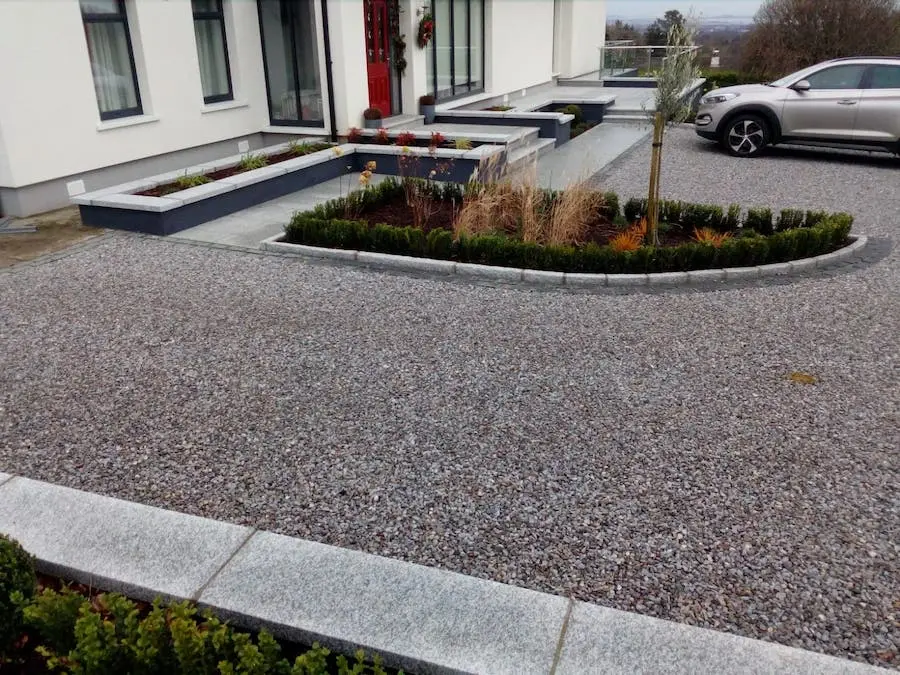
For homeowners seeking the absolute cheapest driveway option, gravel is difficult to beat. A standard gravel driveway in Ireland typically costs between €60 and €85 per square metre, making it significantly more affordable than most alternatives. Elements such as borders, steps, kerbing / flower beds all increase the overall cost. For an average-sized driveway of 50 square metres, you’re looking at approximately €4,250. For larger projects the cost works out at a better value power square metre.
Gravel driveways consist of loose stones spread over a compacted base layer. The installation process is relatively straightforward: the area is excavated to the appropriate depth, a weed-suppressing membrane is laid, followed by a sub-base of compacted hardcore, and finally topped with your chosen gravel.
Advantages of Gravel:
- Lowest upfront installation cost
- Excellent drainage properties, reducing puddles and runoff issues
- Wide variety of colours and stone sizes available
- Easy to install, even as a DIY project for the confident homeowner
- Permeable surface complies with drainage regulations
- Pleasant crunching sound provides a security benefit
Disadvantages of Gravel:
- Requires regular maintenance, including raking and topping up
- Stones can migrate onto lawns and into the street
- Not ideal for areas with steep gradients
- Can be difficult to shovel snow in winter
- May not suit all architectural styles
- Gravel can be susceptible to weeds if not properly maintained
Despite requiring ongoing maintenance, gravel remains an excellent choice for budget-conscious homeowners, particularly for longer driveways where the cost savings become more pronounced.
Tarmac (Asphalt): The Best Value Compromise
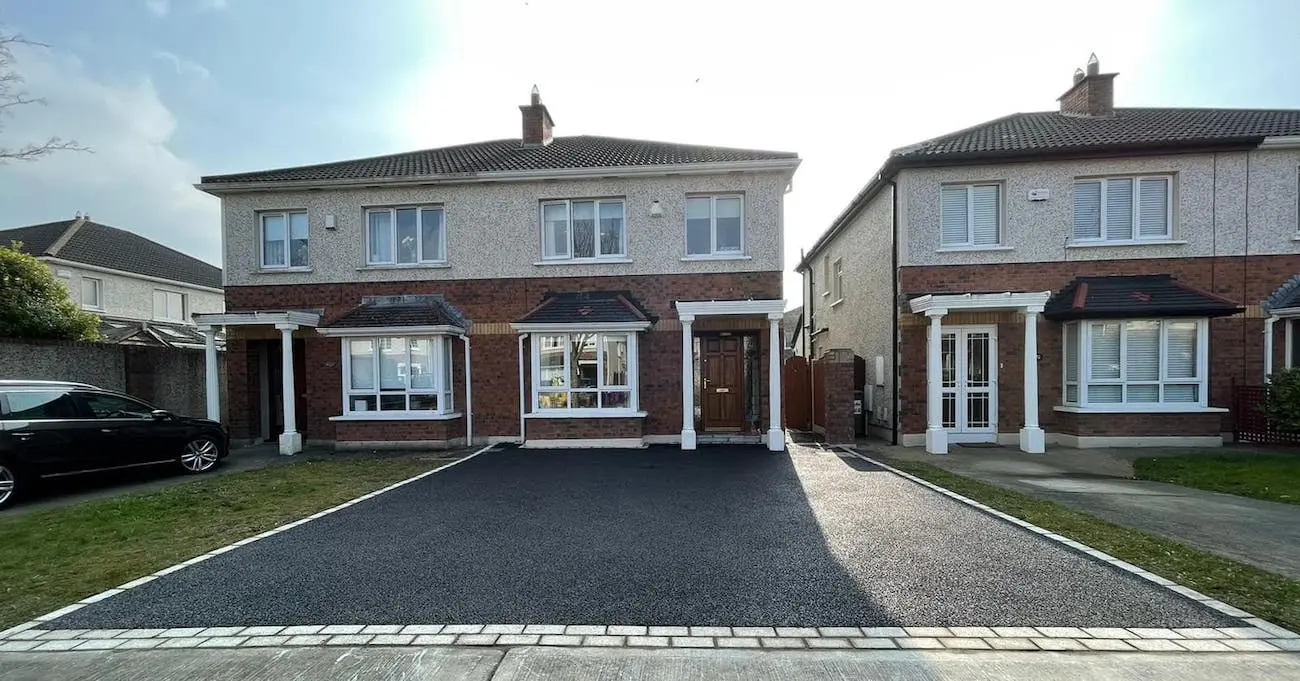
If you’re seeking a balance between affordability and low maintenance, tarmac (asphalt) represents the sweet spot for many Irish homeowners. Tarmac driveways typically cost between €65 and €90 per square metre, translating to approximately €4,500 for a 50-square-metre driveway.
Tarmac has been a popular choice for decades due to its durability and smooth finish. The installation involves laying hot asphalt over a prepared stone base, which is then compacted and allowed to cure.
Advantages of Tarmac:
- Relatively inexpensive compared to block paving or concrete
- Quick installation—often completed in a single day
- Smooth, even surface suitable for all vehicles
- Requires minimal maintenance
- Resistant to Irish weather conditions
- Can last 15-20 years with proper care
- Can be resurfaced rather than completely replaced
Disadvantages of Tarmac:
- Limited aesthetic appeal compared to other options
- Can soften in extreme heat
- Oil and fuel spills cause staining and damage
- Requires resealing every few years
- Less permeable than gravel (though permeable options exist)
For homeowners prioritising practicality and value over decorative appeal, tarmac offers an excellent long-term investment that won’t require the ongoing maintenance of gravel.
Concrete: Durable and Cost-Effective
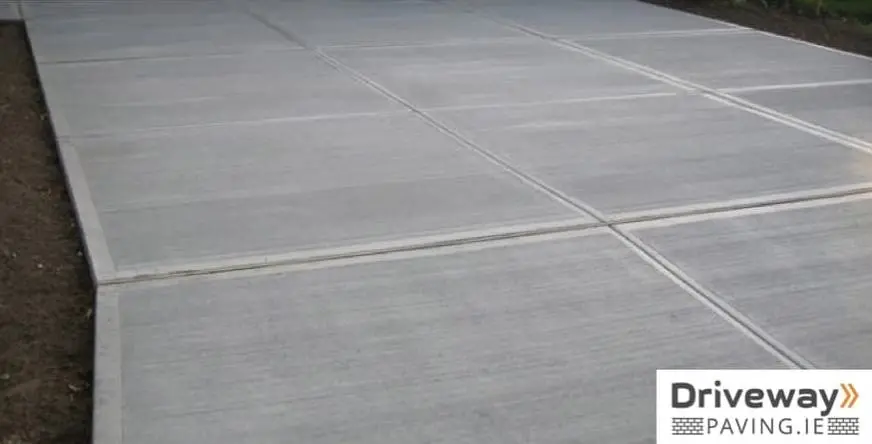
Concrete driveways occupy a similar price point to tarmac, typically costing between €80 and €100 per square metre. This places a standard 50-square-metre driveway at approximately €5,000. Larger projects work out better value per square metre. Drainage, steps and kerbing may all add to the overall cost. Pattern or coloured concrete is also an additional cost.
Whilst marginally more expensive than tarmac initially, concrete’s longevity can make it more economical over time.
A concrete driveway involves pouring a cement mixture over a prepared base, which is then levelled, smoothed, and allowed to cure for several days before use.
Advantages of Concrete:
- Extremely durable—can last 25-30 years or more
- Minimal maintenance requirements
- Handles heavy loads without damage
- Can be stamped or stained for decorative effects
- Reflects light, improving visibility at night
- Resistant to oil and fuel stains
Disadvantages of Concrete:
- Plain concrete can appear industrial or stark
- Susceptible to cracking in freezing conditions
- Difficult and expensive to repair if damaged
- Requires expansion joints to prevent cracking
- Installation takes several days including curing time
- Not permeable without special modifications
Concrete works particularly well for homeowners seeking a “set it and forget it” solution who don’t mind the utilitarian appearance or are willing to invest in decorative finishes.
Making Your Driveway Installation More Affordable
Regardless of which material you choose, several strategies can help reduce your overall costs:
DIY Elements: Whilst most homeowners should leave the actual surface installation to professionals, you can reduce costs by handling demolition of the old surface, excavation, or edging work yourself.
Timing Your Project: Contractors may offer lower rates during quieter winter months (weather permitting) when demand for driveway work decreases.
Simplify the Design: Straight, rectangular driveways cost less than curved or irregular shapes. Minimising decorative borders and additional features reduces both material and labour costs.
Adequate Preparation: Ensure proper drainage and ground preparation from the outset. Cutting corners on the foundation may save money initially but leads to costly repairs later.
Compare Multiple Quotes: Obtain at least three written quotes from reputable contractors, ensuring they include the same scope of work for accurate comparison.
The True Cost of Cheap
Whilst seeking the most affordable driveway option is perfectly reasonable, it’s essential to consider long-term value rather than purely upfront costs. A poorly installed cheap driveway that requires constant repairs or replacement within a few years represents false economy.
Ensure any contractor you hire is properly insured, experienced, and willing to provide references. A quality installation of even the most budget-friendly material will outperform a substandard installation of a premium product.
Consider also the hidden costs of maintenance. Gravel, whilst cheapest to install, requires regular upkeep. Calculating the total cost of ownership over 10-15 years provides a more accurate comparison between materials.
Conclusion
When determining the cheapest driveway option for your Irish home, gravel emerges as the clear winner for upfront costs, followed closely by tarmac and concrete for those seeking low-maintenance alternatives. However, “cheapest” doesn’t necessarily mean “best value.” Your ideal choice depends on your specific circumstances: budget constraints, aesthetic preferences, maintenance willingness, and how long you plan to remain in your property.
For absolute minimum expenditure, particularly on longer driveways, gravel offers unbeatable value. If you prefer a more permanent, low-maintenance solution, tarmac provides excellent value for money. Concrete suits those planning to stay long-term who want to minimise future maintenance concerns.
Remember that a driveway is a long-term investment in your property. Choosing the right material and ensuring quality installation will provide years of reliable service whilst enhancing your home’s kerb appeal and value. By carefully weighing your options and selecting a reputable contractor, you can achieve an attractive, functional driveway that meets both your budgetary requirements and practical needs.